
Figs
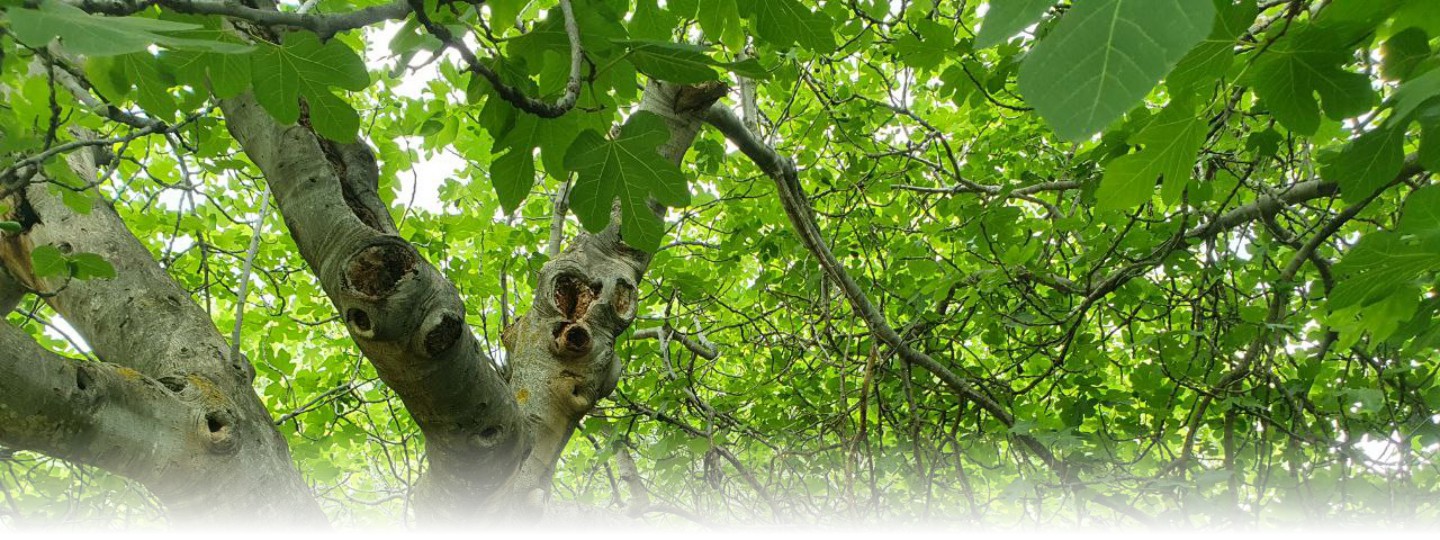
Wild figs are common in Sardinia from sea level to above 1000 m. They grow best were their feet come in contact with running water, but they can also colonize cracks in cliffs or trees, helped by the birds who spread seeds in their droppings.
Figs produce male and female flowers on different plants, they are pollinated by tiny wasps. The female wasp enters the male fig from a small opening on the bottom of the fruit. Eggs and larvae development, as well as mating, occurs inside the fig. The new generation of females then leave the fig, covered in pollen, and looks for another fig to lay eggs.
If the fig is male, the wasp’s cycle begins anew. If the fig is female, the insect pollinates it. The fruits develop, and inside them the seeds to propagate the plant, on which the wasp depends.
Most figs can ripen without pollination, but will not produce viable seeds. This allows to obtain figs in places where the wasp cannot survive, as it is more susceptible to cold than the plant.

Vineyards and recent olive grooves in Ozzastra, with almond trees bordering the plots edges.
Author: Aurelio Candido
© Aurelio Candido
It is one of the first plants to be cultivated, and in Sardinia wild plants must have been used by the earliest colonizers. Traces of its use are attested since the Neolithic – as suggested by seeds found in archeological sites.
They were most often grown in polycultures, but in some of the most suited areas (Chia, Baronia, the region around Casteddu…) some plantations existed.
They are also one of the fruit trees that more often made it to courtyards and home gardens. A privilege shared with citrus trees, persimmons, pomegranates and few others.
Vineyards and recent olive grooves in Ozzastra, with almond trees bordering the plots edges.
Author: Aurelio Candido
© Aurelio Candido
The fig was valued fresh and dried (pilarda de ficu), and was important especially for the possibility to store it in this form. The sweetness of the fruit made it valuable for pastry, or as a treat for children – it was among the gifts given to children when they went door to door during the commemorations for the departed, on November the 2nd.
Because of the scattered distribution of the trees, the labour intensive harvesting, inconstant yields and the perishability of the fresh fruits, figs are mostly cultivated for personal consumption. It is possible to find them in local markets, but usually in small amounts and at high prices.
Vineyards and recent olive grooves in Ozzastra, with almond trees bordering the plots edges.
Author: Aurelio Candido
© Aurelio Candido
Plants are long lived – trees are still productive after a century and more – require no irrigation and have little pest problems. The weak branches of older trees can break easily, and invite fungi and other parasites in, which can weaken or kill the plant. Pruning must be light and frequent, to keep the plant in the appropriate shape and size, and to ensure good air circulation.
Usually no fertilizer is applied and if pesticides are used, it is mainly on the wounds of the wood.

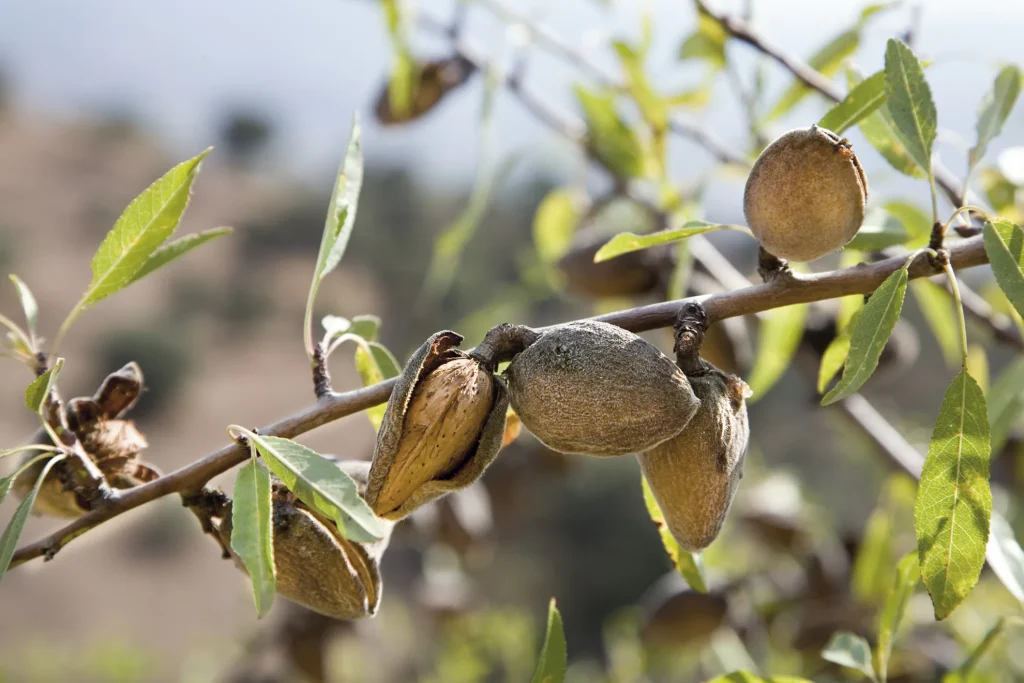
Ripe almonds on a branch.
Author: Nelly Dietzel
© Ilisso Edizioni