
Olive Oil
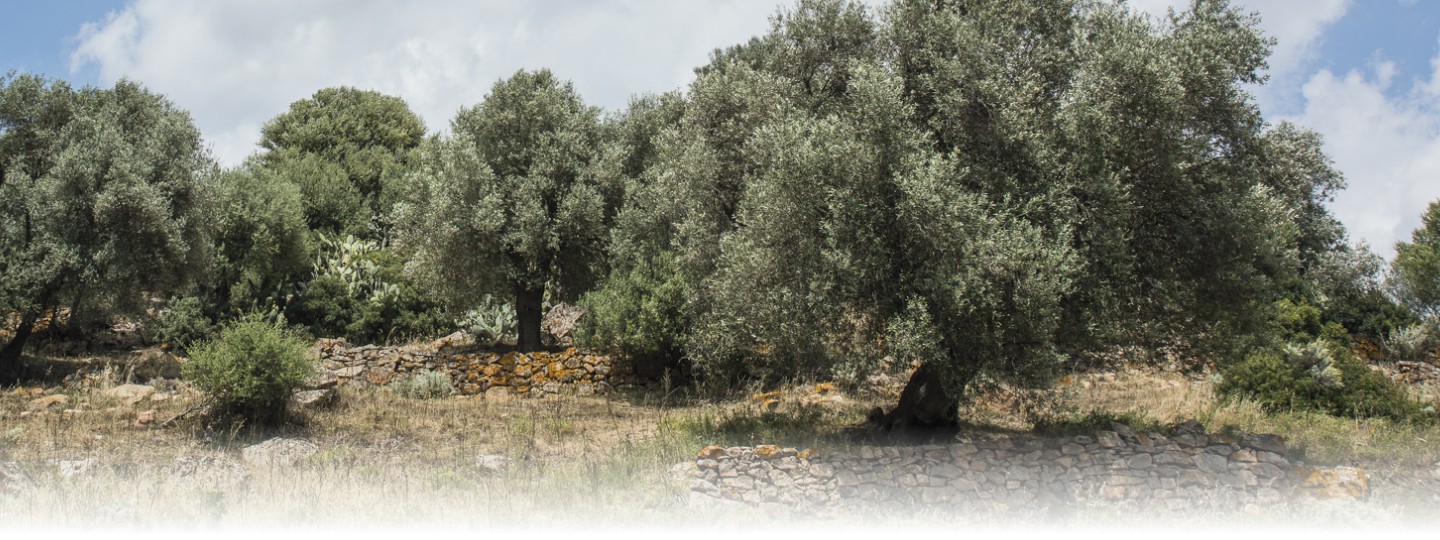
Wheat, olive tree and grape vine are the triad of mediterranean agriculture, the sources of the staples for all people, since agriculture rose in this area of the world. The importance of the olive tree cannot be overstated: olives provided a caloric food, oil was the main fatty component of the diet and an essential cooking medium. The leaves are fodder to animals, flexible shoots are used for basket weaving, the hardwood is prized for several works and as a high burning fuel.
In Sardinia, wild olives are indigenous. They grow from the sea to the mountains, someplace as scattered individuals, but in some areas as the main component of macchia or woodland. Good oil can be obtained by their fruits – and until recently, they were sourced by poor people for this purpose. Over millennia, varieties were domesticated locally and brought from beyond the sea.
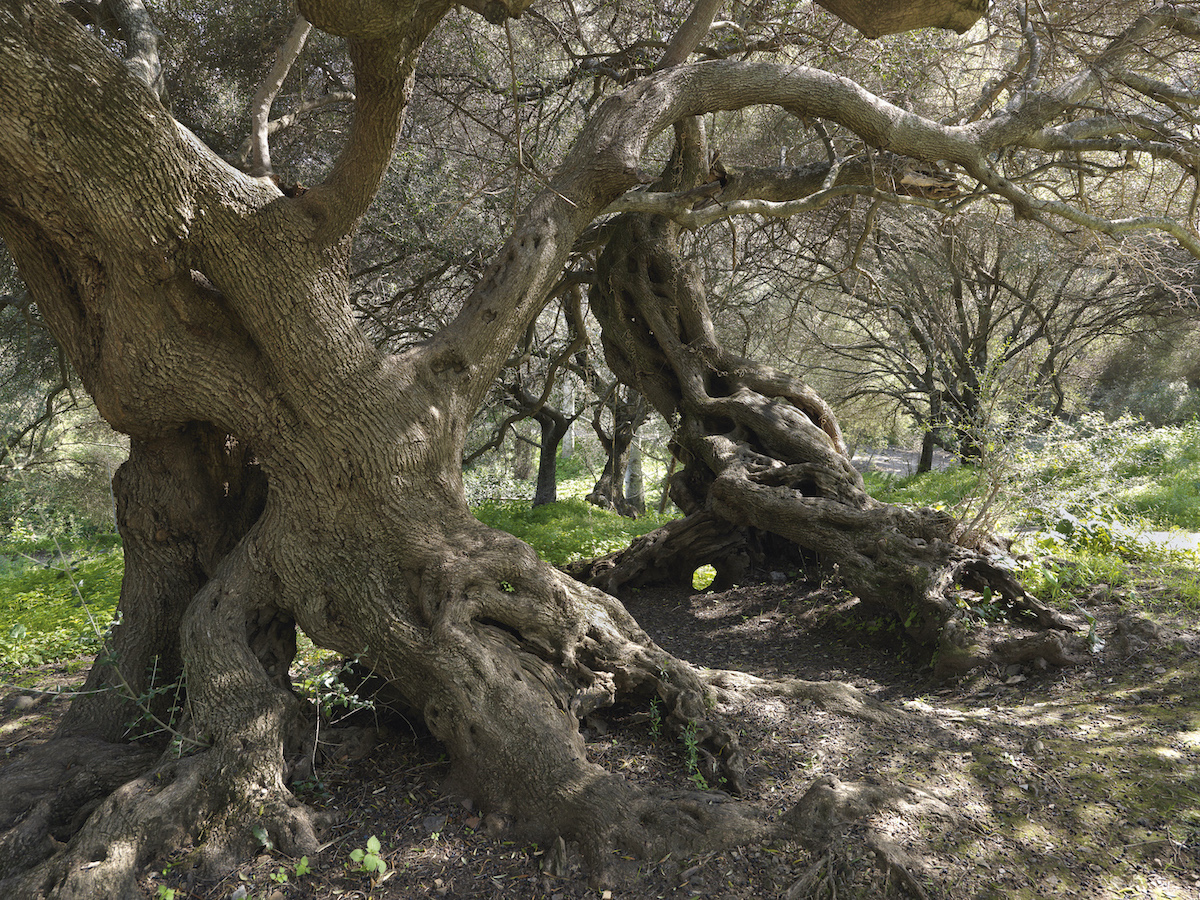
Old gnarly wild olive trees.
Author: CHECK AUTHOR
© Ilisso Edizioni
Olive trees are by far the most common perennial woody crop on the island, occupying 60% of these surfaces – with the rest divided among grape vine (30%) and remaining fruit trees. Many forms grown in the island are suitable for producing both oil and preserved olives.
The characteristics of the oil are influenced by the plant’s variety, so different cultivars diffused in different regions of the island, according to the taste of local communities. Most have shown genetic affinity with varieties present in three different mediterranean regions. One group is indigenous to the island, these are varieties cultivated mainly in the south, some have names that tie them with places in the Iberian peninsula, but show no link with these. A second cluster shows affinity with varieties from central Italy and a third with southern Italian varieties.
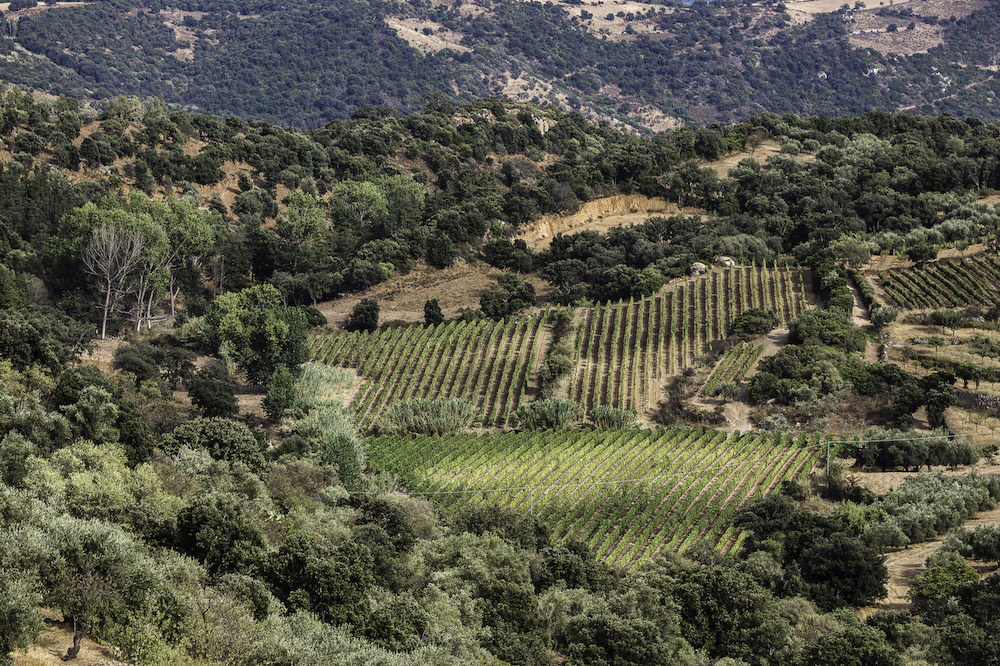
The gray-green fronds of domestic olive trees mingle with the dark green of stone oaks in these re-wildered – likely abandoned -groves in Ozzastra.
Author: Aurelio Candido
© Aurelio Candido
Today, olives are usually harvested from October to December. As the time of harvest advances, olives ripen and the resulting oil will be milder. After harvesting, olives have to be quickly transformed. After a few days (just one or two in the best cases), olives are brought to a mill, washed and pressed to extract the oil. This can be then filtered or unfiltered. Right after pressing, it has a very pungent taste, and a bitter aftertaste, that can be overwhelming. It needs to settle and rest for about a month in casks (today, ideally stainless steel ones), before being transfered to smaller vessels.
Most olives are grown on small plots, often owned by extended families that bring them to the mill to have a personal oil reserve. Such grooves and even many of the commercial ones, have trees with an irregular distribution, that follows local topography and geology, or the scattering of the wild rootstocks. Often they are located on steep slopes, at times terraced, but often with small retainment walls built below the single plants. As a result, harvesting is mostly manual, carried on nets spread below the trees, often plucking by hand or with the help of rakes or shakers.
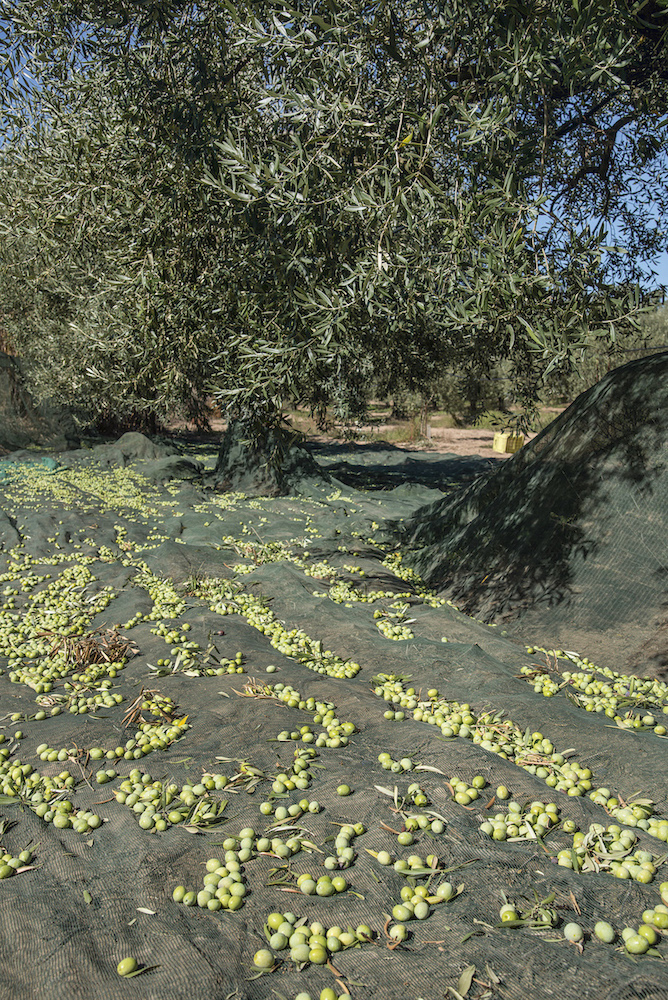
Nets spread out below olive trees in Donori for the manual harvest.
Author: CHECK AUTHOR
© Ilisso Edizioni
In recent years, some small and medium businesses are offering well-packaged products, emphasizing their exclusivity and high quality, which is certified by the many prizes that these products often win. They are oriented mainly to a market of turists, or for export, but the market at large serves the internal demand, with customers often having trusted producers.
Sardinia is both an oil importer – the production cannot satisfy internal demand – and an exporter, with more than 50% of exports going to Switzerland. However, not all exported oil comes from olives grown on the island: olives and oils of EU or other origin are often used. Aristeu sells oil from olives grown in Sardinia only, but the practice of mixing oil from different regions is not a new one: it was and is common practice for many large oil producers (even under the roman empire!) to obtain a more standardized product, and is not negative per-se. But problems arise when the traceability of the various oils – information on their origin, quality, handling, workers conditions – are lost or hidden through this process.
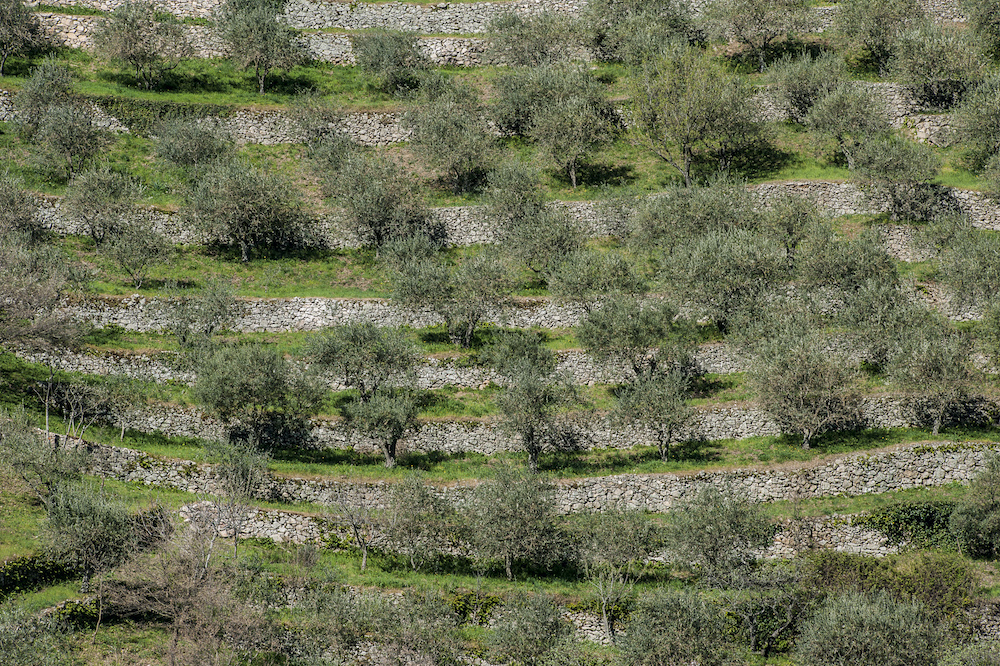
Terraced olive groves in Bolotana.
Author: CHECK AUTHOR
© Ilisso Edizioni