
Olives
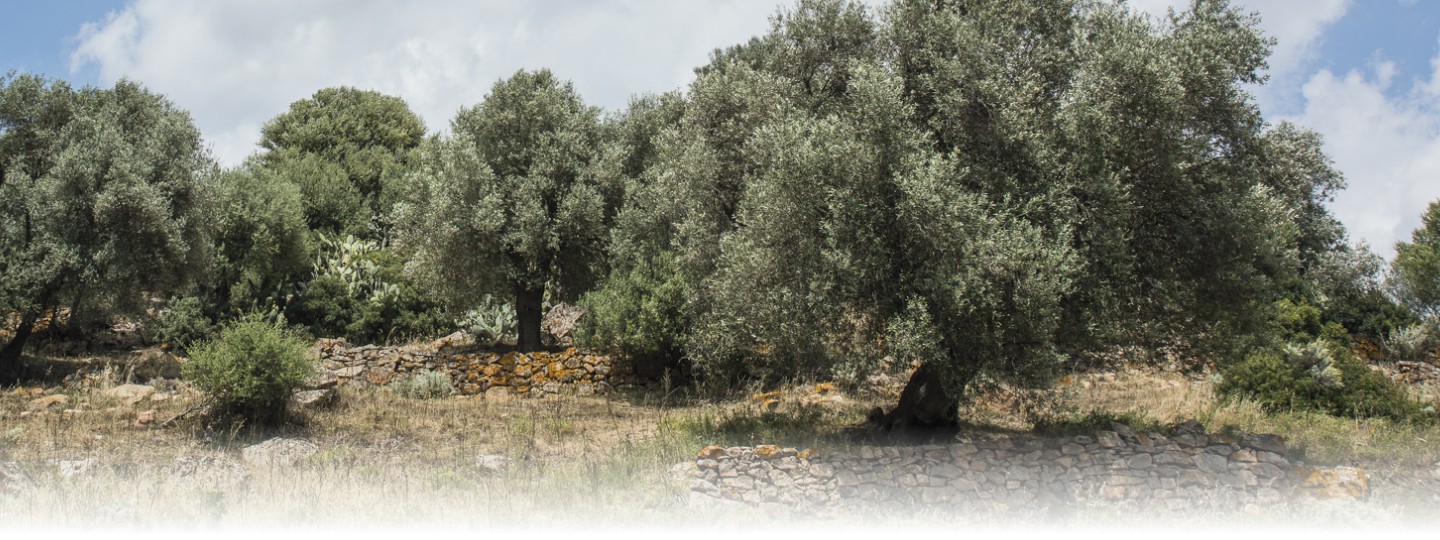
Wheat, olive tree and grape vine are the triad of mediterranean agriculture, the sources of the staples for all people, since agriculture rose in this area of the world. The importance of the olive tree cannot be overstressed: olives provided a caloric food, oil was the main fatty component of the diet and an essential cooking medium. All parts of the plant had medicinal uses. The leaves are fodder to animals, flexible shoots are used for basket weaving, the hardwood is prized for several works and as a high burning fuel.
Wild olives are indigenous in Sardinia. They grow from the sea to the mountains, someplace as scattered individuals, but in some areas as the main component of macchia or woodland. Over millennia, varieties were domesticated locally and brought from beyond the sea.
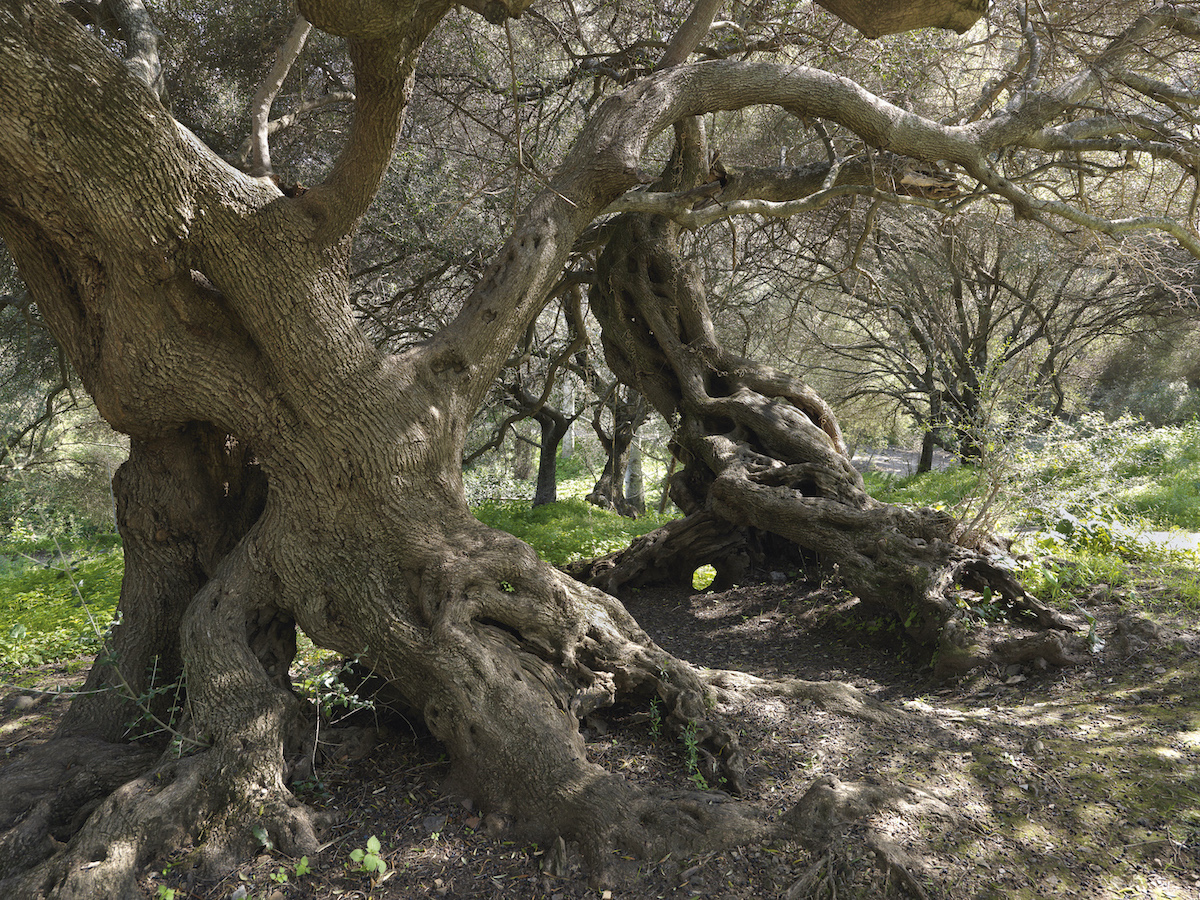
Old gnarly wild olive trees.
Author: CHECK AUTHOR
© Ilisso Edizioni
Olive trees are by far the most common perennial woody crop on the island, occupying 60% of these surfaces – with the rest divided among grape vine (30%) and remaining fruit trees. Many forms are suitable for producing both oil and table olives, but only about 7% is transformed to be eaten.
Most table olives are produced in the municipalities of Patiolla and Gonnos. Different varieties are used, but the most common are de Gonnos and Tunda, which are probably indigenous of the island.
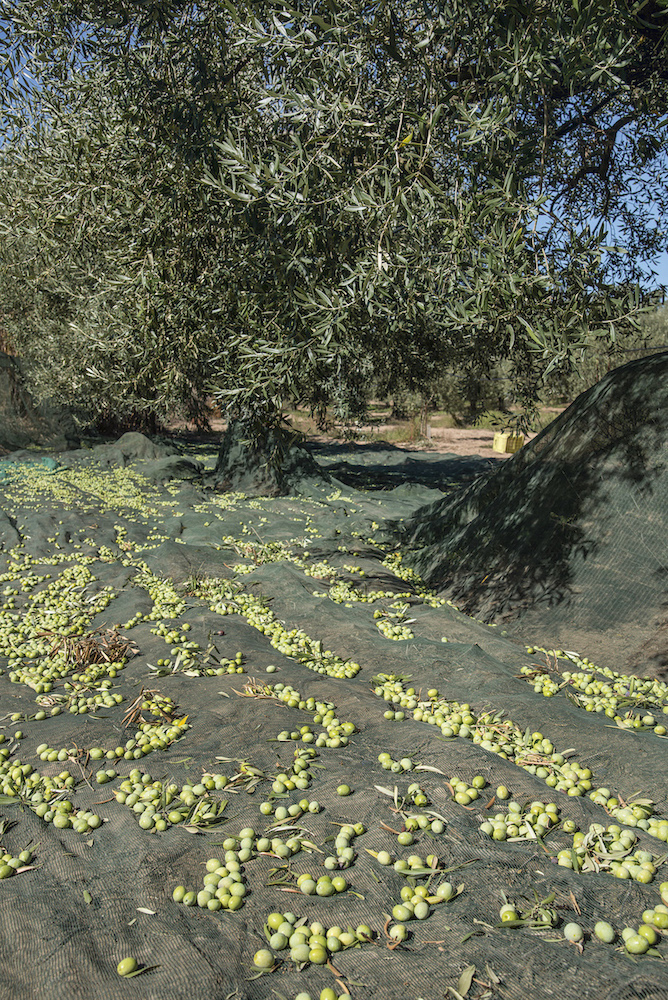
Nets spread out below olive trees in Donori for the manual harvest.
Author: CHECK AUTHOR
© Ilisso Edizioni
Table olives can be harvested at different ripening stages, from October to January. Even when overripe, they are extremely bitter, and require some processing to become palatable.
Fully ripe olives can be salted and dried under the sun, in the oven, or over the fireplace or a radiator. The wrinkled olives are washed and blanched. They are then preserved in oil.
The most common preservation method, however, regardless of ripening stage, is fermentation in brine. Olives are washed thoroughly and immersed in unsalted water, which is changed even twice a day for a week. After this step, they are covered in brine. They can be cut or crushed to speed fermentation, but whole olives can require from 2 up to 12 months to cure, depending on variety and stage of ripeness. Salt and water are often the only additions, but there are countless recipes to flavor the final product. In Sardinia the most common are probably the addition of laurel leaves and/or fennel seeds.
Today, most olives are subjected to an immersion in a lye brine, before fermentation. This lowers the time to obtain a finished product to 1-3 months.
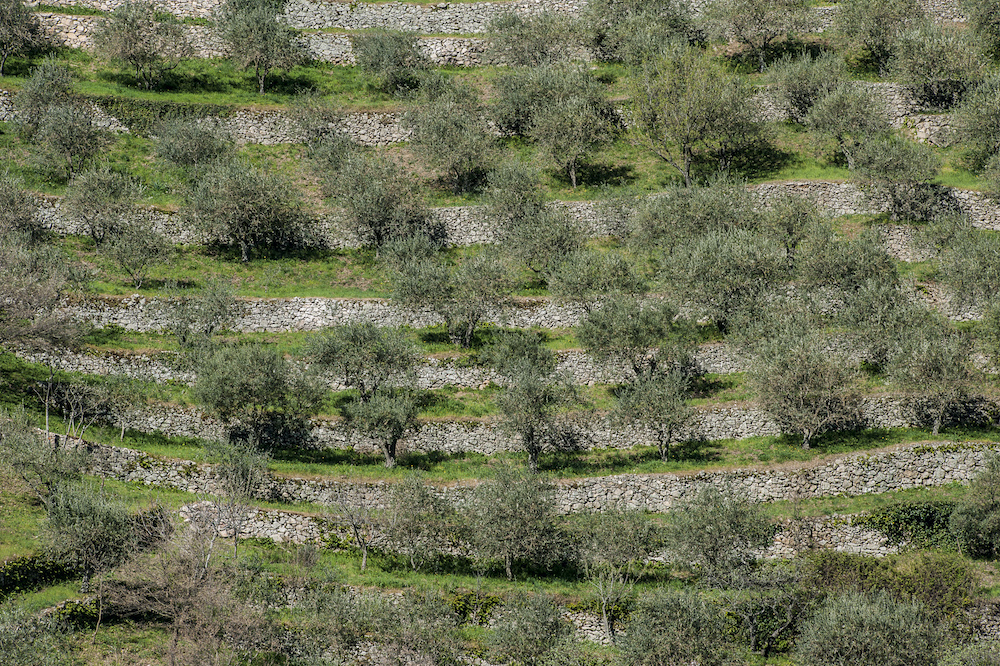
Terraced olive groves in Bolotana.
Author: CHECK AUTHOR
© Ilisso Edizioni