
Saffron
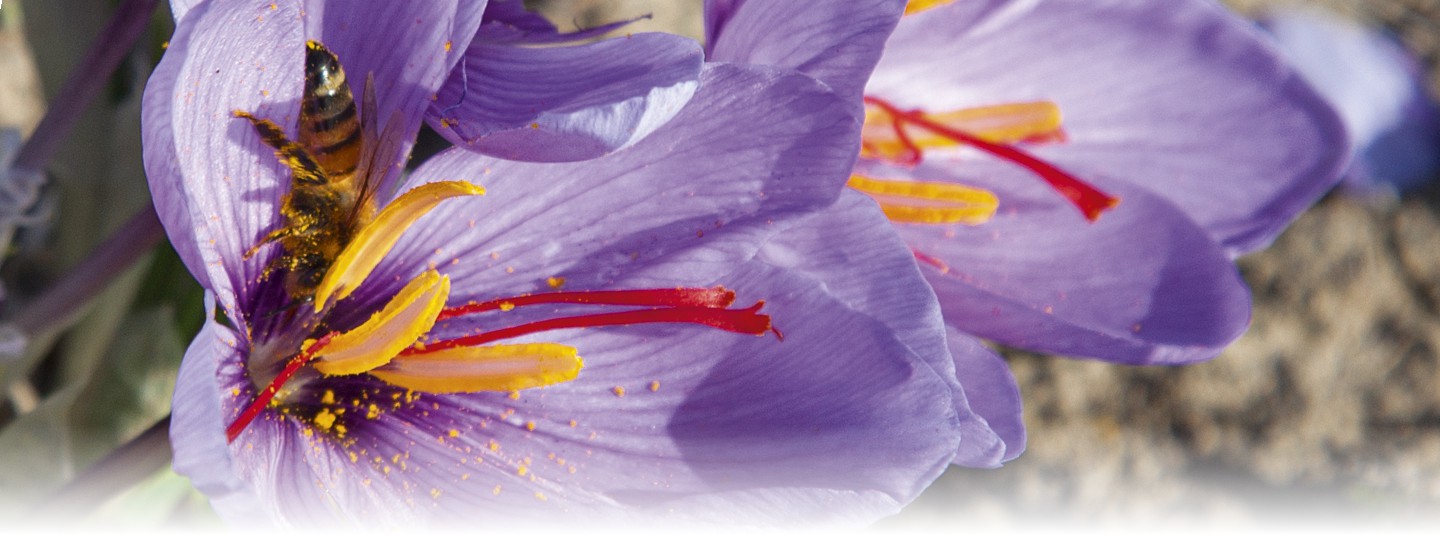
Saffron is obtained by drying the stigma (i.e., the tip of the female organs) of the saffron crocus. This is a sterile hybrid or mutation, unknown in the wild. It was probably selected in what is today Greece. Its cultivation spread to the rest of the Mediterranean and to Anatolia, Iran and Kashmir in the east. This belt is where most of the world’s saffron is still grown today (with Iran, Afghanistan and Kashmir as the top producers).
In Sardinia its use is mentioned in roman sources, but the introduction of the plant in the island is likely much older. The export of this spice is attested since the XIV century.

Vineyards and recent olive grooves in Ozzastra, with almond trees bordering the plots edges.
Author: Aurelio Candido
© Aurelio Candido
Today, production remains limited to small quantities — just a few hundred kilos per year — most of which comes from three municipalities: Santu ‘Engiu, Turri, and Biddanoa Franca. Despite this, the island is one of Europe’s main hotspots, second only to Spain and Greece.
Sardinian saffron tends to be more expensive than its Greek and Spanish counterparts, largely because of the small size of the enterprises and the fact that most of the work is done entirely by hand and with organic methods. Its quality and its flavoring properties are usually very high.
Most saffron is sold to satisfy internal demand. In Sardinia it is used in pasta and rice dishes, to flavour broths, and to prepare bread and sweets. It was also used to colour wool or silk, and as a medicinal plant.
Vineyards and recent olive grooves in Ozzastra, with almond trees bordering the plots edges.
Author: Aurelio Candido
© Aurelio Candido
The high price of saffron is justified by its extremely labour-intensive production. The soil is first prepared CHECK TIME OF YEAR – sometimes enriched with manure – before planting the bulbs. These are placed 10–20 cm apart, in rows spaced about 50 cm from each other. In spring, the bulbs produce long, slender leaves, which are kept free of weeds through careful manual weeding. With time, the bulbs multiply underground forming smaller bulbs around them. Every two to four years, IN CHECK THE TIME they are dug up, separated and replanted after storage.
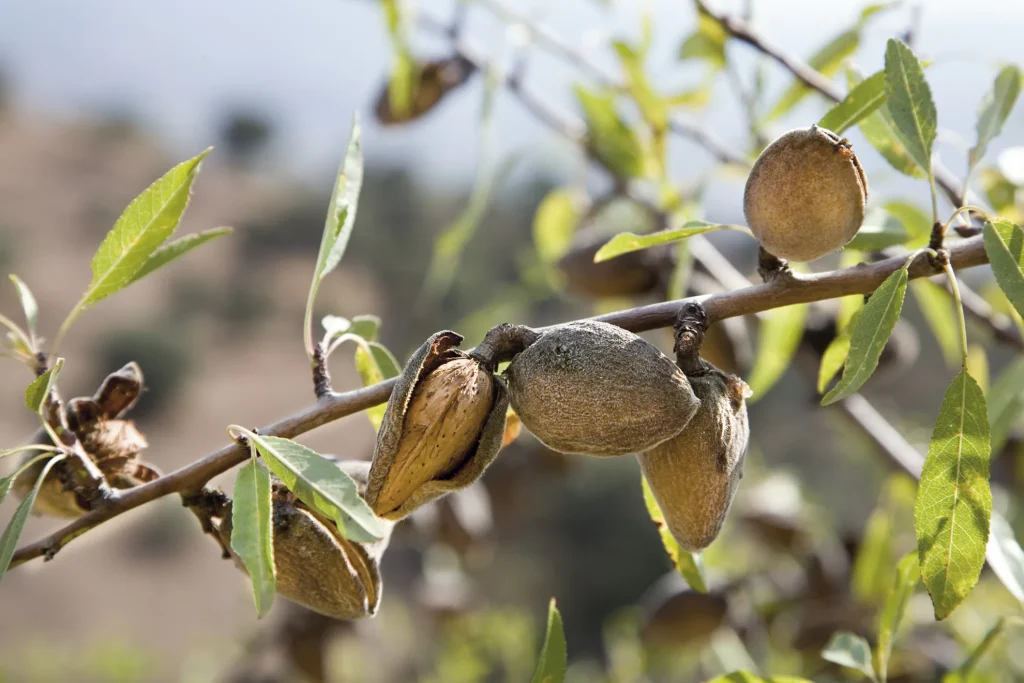
Vineyards and recent olive grooves in Ozzastra, with almond trees bordering the plots edges.
Author: Aurelio Candido
© Aurelio Candido
From late October to mid-November, the flowers emerge in flushes and must be picked by hand shortly after they appear. Ideally, they are harvested while still closed, in the very early morning, when the stigmas are fresher and easier to separate. If the flowers remain exposed to the elements for a few days, it compromises the spice’s yield and quality.
Once the flowers are collected, the stigmas are separated and left to dry. Traditionally, they were spread on trays and placed near a fireplace. In Sardinia, it was customary to moisten them slightly with olive oil before drying. The dried saffron is then stored in glass or earthenware containers, protected from light. Its aroma evolves noticeably over time, and it is best to store it for a few months before use.